
Updated August 2026
Smart bulbs and regular LED bulbs can both provide efficient everyday lighting, but they solve different problems. A normal LED bulb is simple. Install it, use the wall switch and replace it when necessary. A smart bulb adds software, wireless connectivity, schedules, colour control and voice-assistant integration. Those features can be valuable in the right room and unnecessary in another.
This guide explains whether smart lights are worth buying in 2026. It compares Wi-Fi and Bluetooth bulbs, colour-changing and white bulbs, app control, voice assistants, brightness, energy use, privacy and long-term value. Product examples include Govee and Amazon Basics smart bulbs available from Tech Treasuries.
Smart bulbs vs regular LED bulbs: quick comparison
| Feature | Smart bulb | Regular LED bulb |
|---|---|---|
| Wall-switch control | Yes, but power must remain on for remote features | Yes |
| App control | Usually available | No |
| Voice control | Available on compatible models | No without a smart switch or plug |
| Schedules and routines | Built into many apps | Requires separate timer or smart control |
| Colour changing | Available on RGB and RGBWW models | Normally fixed colour temperature |
| Setup complexity | Higher | Very low |
| Purchase price | Usually higher | Usually lower |
| Best for | Automation, ambience and flexible control | Simple dependable lighting |
What is a smart bulb?
A smart bulb is an LED light with built-in electronics that allow it to communicate with an application, hub or voice assistant. Depending on the model, it may connect through Wi-Fi, Bluetooth, Zigbee, Thread or another wireless standard. Some bulbs work directly with a phone and router. Others require a separate bridge.
Smart features can include dimming, colour temperature adjustment, millions of colours, timers, sunrise routines, away modes, music synchronization and grouped room control. Not every bulb supports every function, so the exact listing and application should be reviewed.
The bulb still needs continuous electrical power for remote commands. When someone turns off the normal wall switch, the bulb becomes unavailable to the app until power is restored. This is one of the most common smart-lighting frustrations.
What is a regular LED bulb?
A regular LED bulb provides efficient light without network features. It may be dimmable when paired with a compatible wall dimmer, but it does not normally include an app or voice control. Its strengths are low cost, simple setup and independence from accounts, routers and software updates.
Regular LEDs are best for fixtures that only need dependable on-and-off lighting. Hallways, storage rooms, bathrooms and rarely adjusted lamps may not benefit from wireless features. A good lighting plan can use ordinary LEDs in simple areas and smart bulbs only where automation adds value.
When smart bulbs are worth the extra cost
Smart bulbs are worthwhile when they change how you use a room. Bedroom lighting can gradually brighten in the morning and become warmer at night. Living-room lights can dim for films. Gaming-room lights can create colour scenes. Outdoor lights can follow schedules. A lamp in a difficult-to-reach location can be controlled without moving furniture.
They also help people who want hands-free control. A compatible voice assistant can turn lights on and off, adjust brightness or activate a scene. This can be convenient when carrying items, cooking or managing accessibility needs.
The key is repeated use. Paying extra for a smart bulb makes sense when schedules, dimming or colour control are used every week. It is poor value when the app is opened once and the bulb is then treated like a normal light.
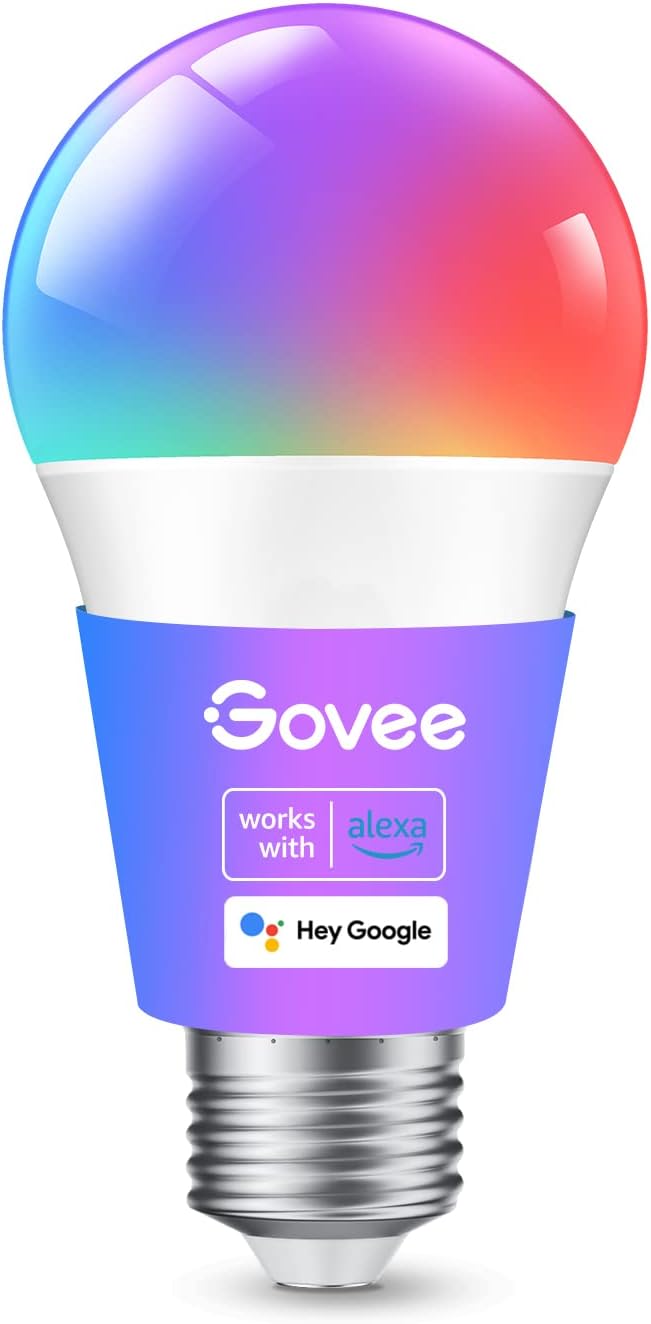
Best multi-bulb starter option: Govee Smart Light Bulbs
The Govee Smart Light Bulbs 4 Pack is designed for shoppers who want several colour-changing bulbs in one purchase. The listing includes Wi-Fi, Bluetooth, Alexa and Google Assistant compatibility, music synchronization and 800-lumen A19 bulbs.
A four-pack is useful when several fixtures are in the same room. Grouping matching bulbs can produce more consistent colour and brightness than mixing brands. The app can control them together or individually according to supported features.
This model suits bedrooms, entertainment spaces and living rooms where colour scenes and voice control will be used regularly. Check the fixture type, base size, enclosed-fixture limitations and network requirements before buying.
Best simple Alexa option: Amazon Basics Smart A19 Bulb
The Amazon Basics Smart A19 LED Bulb is listed as a 9W, 800-lumen colour-changing bulb designed for Alexa and 2.4GHz Wi-Fi without a separate hub. It is a focused choice for households already using Alexa.
The phrase “Alexa only” is important. A buyer using Google Assistant, Apple Home or another platform should not assume equivalent support. Ecosystem compatibility should be confirmed before purchasing any smart-home product.
A single bulb is useful for testing smart lighting in one lamp before investing in a complete room. It can also suit a bedside or desk lamp that benefits from dimming and scheduled control.
Wi-Fi vs Bluetooth smart bulbs
Wi-Fi bulbs connect to the home network and can often be controlled remotely through the internet. They can work with voice assistants and scheduled routines without keeping the phone nearby. Too many Wi-Fi devices can create management issues on an older router, although a small number of bulbs is normally straightforward.
Bluetooth bulbs connect directly to a nearby phone. Setup can be simple and does not always require a cloud account for basic controls. Remote access and voice integration may be limited unless the bulb also supports Wi-Fi or a bridge.
Many modern bulbs combine Wi-Fi and Bluetooth. Bluetooth can assist setup and local control while Wi-Fi enables remote features. Read the application requirements and supported frequency. Many smart bulbs use 2.4GHz Wi-Fi rather than a 5GHz-only connection.
Do smart bulbs save electricity?
Smart bulbs use LED technology, so their lighting energy consumption can be similar to regular LED bulbs of comparable brightness. Automation can reduce wasted use by turning lights off on a schedule or when a routine ends. However, the bulb’s wireless electronics consume a small amount of standby power while waiting for commands.
The main energy advantage comes from behaviour. A scheduled system that prevents lights from remaining on overnight can save energy. Colour-changing features alone do not guarantee savings.
Compare watts and lumens rather than terms such as energy efficient. Lumens describe brightness. Watts describe electrical power. A lower-watt bulb that produces the required lumens is generally more efficient.
Understanding brightness and lumens
An 800-lumen bulb is commonly used as a replacement for a traditional 60W incandescent bulb. Actual perceived brightness depends on shade, fixture, wall colour and colour temperature. Dark colours and deeply saturated RGB settings often appear dimmer than white light at the same maximum rating.
A smart bulb should be chosen for its white-light performance first. Colour modes are excellent for ambience but may not provide enough usable light for reading or work. A room may need several bulbs or a separate task lamp.
White temperature vs RGB colour
Tunable-white bulbs can shift between warmer and cooler white light. Warm light creates a relaxed atmosphere. Cooler light can feel more alert and suitable for work. RGB bulbs add saturated colours for entertainment and decoration.
RGBWW models include colour LEDs plus warm and cool white channels. This can provide better everyday white light than a basic RGB bulb that tries to create white by mixing colours. Check the product description because naming differs between manufacturers.
Smart bulbs for bedrooms
Bedrooms benefit from schedules, gradual dimming and warm evening light. A morning routine can increase brightness before an alarm. A night scene can provide low light without reaching for a switch.
Avoid extremely bright cool light immediately before sleep when a softer setting is more comfortable. Smart lighting can support a routine, but it does not replace healthy sleep habits.
Smart bulbs for gaming and entertainment
Colour-changing lights can make a gaming room feel more immersive. They can match a team colour, provide background light behind a monitor or create separate scenes for games and films. The Govee RGBIC LED Strip is another option for accent lighting rather than replacing a main bulb.
Music synchronization and screen-reactive effects are decorative. They may distract during competitive play. Use subtle lighting behind the screen to reduce harsh contrast rather than filling the entire room with rapidly changing colours.
Smart bulbs for security and routines
Scheduled lights can make a home appear occupied while residents are away. Randomized routines can be more convincing than lights that switch at exactly the same time every day. Smart lighting should be one layer of a broader security plan, not a substitute for locks, alarms and sensible practices.
Remote control also helps users check whether a compatible light is on. Cloud services and internet access can fail, so essential security lighting should still work through a physical switch or local automation.
Privacy and account considerations
Smart bulbs can require manufacturer accounts, network access and cloud services. Review app permissions, password security and update policies. Use a unique password and enable stronger account protection when available.
Some households place smart-home devices on a separate guest or Internet of Things network. This can improve organization and reduce access to personal devices. Router capabilities vary, so follow the manufacturer’s setup guidance.
What happens when the internet goes down?
A smart bulb should continue to operate through its wall switch when powered, but app, remote and voice features may stop during an outage. Bluetooth or local hub control can continue on supported systems. Test essential routines and maintain a physical control method.
Do not use app-only control for a location where immediate reliable light is critical. The wall switch should remain accessible.
Smart bulbs vs smart switches
A smart bulb controls one lamp or fixture. A smart switch controls the circuit and can be better for rooms with several fixed bulbs. Smart switches keep familiar wall control but may require neutral wiring, compatible bulbs and professional installation.
Smart bulbs are easier for renters and lamps because they require no wiring changes. Smart switches are better when family members repeatedly turn off the wall power and disable smart bulbs.
How many smart bulbs should you start with?
Start with one room or one lamp. Learn the app, create useful routines and confirm wireless reliability. Expand only when the features provide real value. Buying many bulbs at once can create unnecessary setup work and lock the household into an ecosystem before it has been tested.
Use matching products in the same room when colour consistency matters. Different brands can display the same named colour differently and may require separate applications.
Which lighting option should you buy?
Choose regular LED bulbs for simple rooms, low cost and dependable wall-switch control.
Choose smart white bulbs for schedules, dimming and adjustable colour temperature without decorative RGB effects.
Choose colour-changing smart bulbs for bedrooms, entertainment spaces and flexible ambience.
Choose Wi-Fi bulbs for remote control and voice-assistant routines.
Choose Bluetooth bulbs for simpler local control when remote access is unnecessary.
Choose a smart switch when one wall control operates several fixed bulbs and permanent installation is suitable.
Build a practical smart lighting setup
Compare bulb type, brightness, assistant compatibility and connection requirements before ordering.
Frequently asked questions
Do smart bulbs work without Wi-Fi?
Basic wall-switch operation normally continues, but app and voice features may be limited. Bluetooth or local hub control can work on supported models.
Do smart bulbs use electricity when switched off in the app?
They use a small amount of standby power while remaining connected and ready for commands.
Can smart bulbs be used in any lamp?
The base, voltage, fixture size, dimmer compatibility and enclosed-fixture rating must match. Check the exact product requirements.
Are smart bulbs safe?
Use products that match the fixture and electrical requirements. Keep software updated and follow the manufacturer’s installation guidance.
Is it better to buy smart bulbs or a smart switch?
Smart bulbs are easier for lamps and renters. Smart switches are often better for permanent multi-bulb fixtures and familiar wall control.
Related buying guides
Continue with our smartwatch comparison, TV size guide and 4K TV technology guide.
Final verdict
Smart bulbs are worth the extra cost when app control, schedules, dimming, voice commands or colour scenes become part of a regular routine. Regular LED bulbs remain the better choice for simple dependable lighting. A thoughtful home uses each where it makes sense. Start small, choose one compatible ecosystem and expand after the first room proves useful.
Product questions can be sent to info@techtreasuries.com. Existing order support is available at orders@techtreasuries.com.
Share:
Apple Watch vs Samsung Galaxy Watch in 2026: Which Smartwatch Is Better?